Field note · Enterprise Content Platforms · · 3 min read
Your CMS belongs in the production incident timeline
Suppose conversion drops at 10:17 and no code shipped that morning. Six minutes earlier, a CMS app changed the configuration behind checkout. If the incident channel shows deployments and application errors but no content activity, the team can spend time clearing the wrong system.
A CMS can change production without touching your code. An editor can publish a broken setting, an integration can update hundreds of entries, and a stolen token can read private content. Those events belong in the incident record while the problem is live.
Contentful made this easier on August 18. Its near real-time audit logs (opens in a new tab) send Enterprise customers' activity to their own AWS, Azure, or Google Cloud storage. Delivery takes about five minutes, on a best-effort basis. The feed records who read or changed which resource, and when.
Put content changes beside everything else
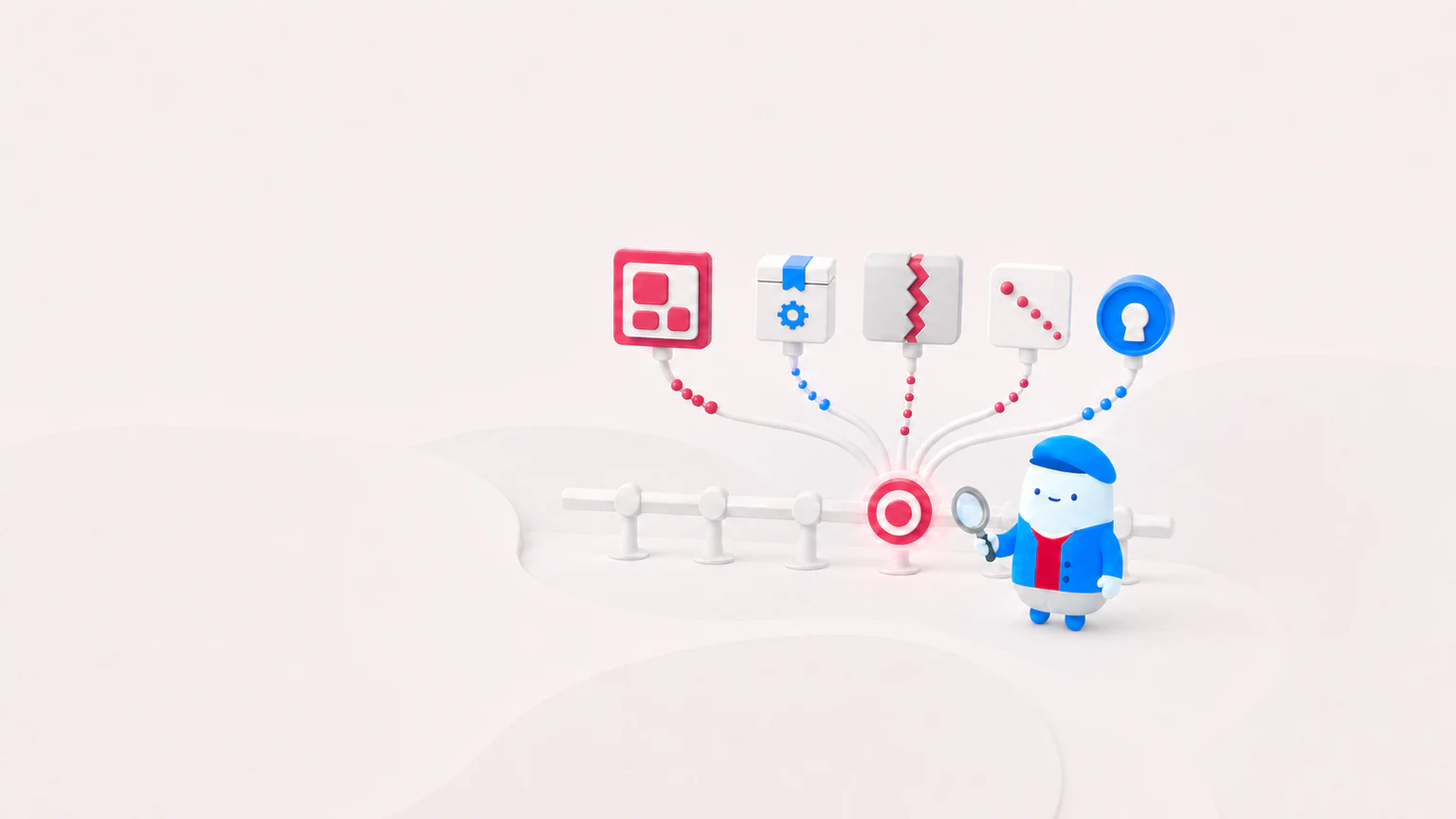
One incident record, five signal sources

CMS activity becomes useful during an incident after it is stored, enriched, and correlated.
CMS activity
Content changes, role updates, app requests, and other CMS activity.
Releases and configuration
Code deployments, environment changes, and configuration releases.
Application behavior
Errors, slow responses, and failures in key journeys.
Traffic
Delivery, conversion, and behavior changes around the event.
Identity
Who or what made the request, and with which credential.
In the checkout example, a responder should be able to search the time window and find the configuration change and the app behind it. Then they can line it up with the first error. The same view should surface unusual reads, bulk changes, role updates, and activity from integrations that should be switched off.
Owners supply the context. A campaign launch can cause a burst of updates, and a migration may read most of a space. The CMS owner knows which jobs are expected, and the security team can investigate the rest.
Seeing a signal is only half the job. In a March 2026 SANS survey (opens in a new tab), 68% of respondents detected identity attacks within 24 hours, while 55% contained them in that time. The survey covers identity attacks in general.
Test the pipeline twice. First break a revenue-critical journey with a content change, then have a test identity read sensitive entries and change a role. Each exercise should end with the team finding the CMS event and its owner, then containing the app or credential without losing the evidence.
For your developer
Contentful's documentation (opens in a new tab) describes each event as a Content Management API request and response in OCSF API Activity class 6003. The OCSF schema (opens in a new tab) gives security tools a shared event shape. Before joining events with the other sources, add the space, environment, content type, app, and business owner.
- Delivery is at least once and best effort, so remove duplicates using metadata.correlation_uid.
- A missing event does not prove that a request never happened.
- If delivery keeps failing, undelivered logs are discarded after 24 hours, and gaps while streaming was off are not backfilled. Keep the daily audit export as the backstop.
Written by the Moga principals.
More from Enterprise Content Platforms
See the Enterprise Content Platforms serviceStart with the content model.
Bring your requirements and your constraints. A principal will tell you what the platform needs.
Book a call