AI products that make it out of the demo.
We build AI systems for clients and for ourselves. That means architecture and LLM integration, with evaluation you can read. The automation around it has to survive real users. Working on our own products is how we learned which parts are hard.
Inside the practice
AI product engineering
Full products, not bolted-on features: architecture, interface, and the plumbing between model and user.
Workflow automation
Automation that survives real users, with the failure paths designed before the happy path ships.
LLM integration & evaluation
Evaluation you can read: quality measured against your cases, not the vendor demo.
Prototype-to-production hardening
The distance between a demo and production is engineering. We close it.
What we have shipped
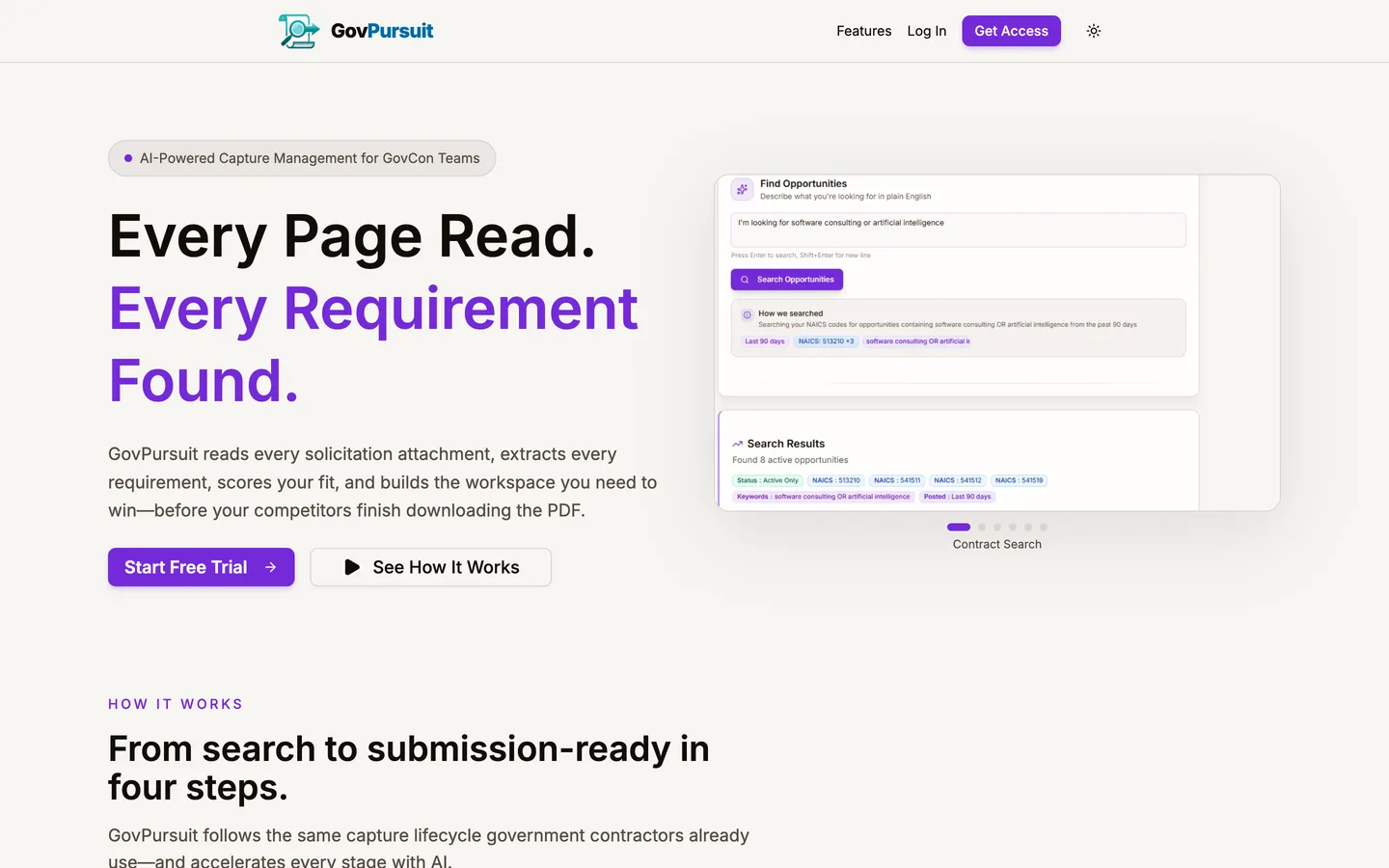
Products we engineer today, including our own.
When custom AI is the wrong call
A prompt and an off-the-shelf tool solve more problems than vendors admit. Try that first. Custom engineering starts paying once the workflow is yours alone and the data needs handling nobody sells ready-made.
Evaluation comes before scale. If we cannot measure whether the model is right, we do not ship it to your users.
Common questions
4 questionsWhat do you actually build?
AI products end to end. Data pipelines and LLM integration, the evaluation harness that catches drift, the application users touch, and the deployment it all runs on. GovPursuit is a current example, built alongside its founder.
Which models and stacks?
Model-agnostic by design. We integrate the major providers alongside open models and pick per task and budget. Evaluation is wired in from the start, so swapping a model later stays a configuration change.
How is this different from AI Rescue?
Rescue finishes something an AI tool started. AI Engineering starts with you from architecture. Same principals either way.
Do you use AI to deliver the work?
Heavily, and openly. The repetitive work goes to the tools. What you pay for is the judgment about what to build and the accountability when it ships.